For food pantry managers

Choice, not a box.

Neighbors pick the food they will actually eat. Volunteers pack from a printed list. Inventory and funder reports keep themselves up to date.

  • A box someone else packed gets thrown out.
  • Less paperwork. More time with people.
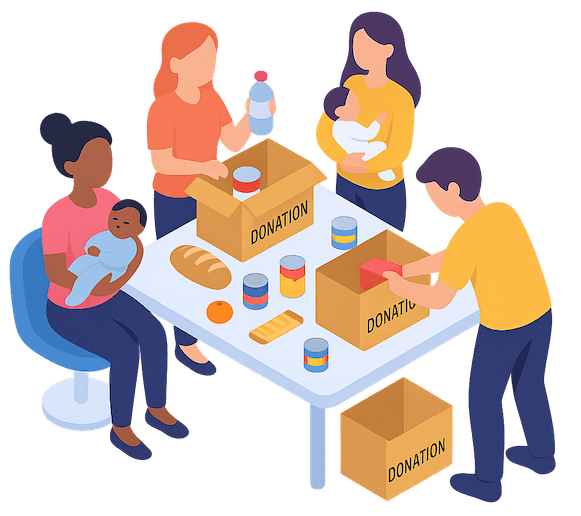
Illustration of food pantry volunteers packing boxes with bread, canned goods, fruit and water

How HelpingHand works

Choice, not a box.

  1. 1

    Inventory control

    Better inventory management comes first.

  2. 2

    Refer or registration

    A partner agency signs a household in (optional).

  3. 3

    Choose

    They pick the items they will actually use, or a standard box with variations.

  4. 4

    Pack

    Volunteers scan barcodes or follow a printed list to pick and pack items.

  5. 5

    Report

    Inventory and donor reports stay in sync automatically, which helps with funding applications.

See it in action

A short walkthrough for food pantry managers.

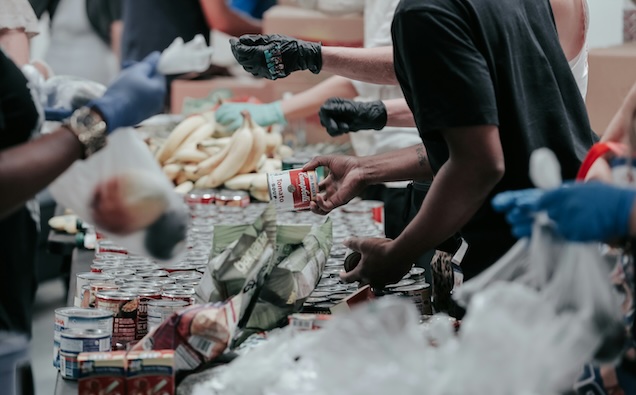
Volunteers in gloves hand-sorting donated food at a busy pantry distribution

The Problem

Pre-Packed Boxes Waste Food, Time, and Goodwill

  • Neighbors take a box home and throw out the third of it they cannot use
  • Nobody knows what is on the shelves until someone walks the storeroom
  • Intake happens on paper, so duplicate registrations go unnoticed
  • Grant reports get rebuilt from sign-in sheets at the end of the year
  • Volunteers spend the distribution on clipboards instead of on people
How It Works

Intake, client choice ordering, inventory and reporting in one place.

Get your pantry running in an afternoon

HelpingHand runs the whole pantry in a browser. Neighbors register once and order what they will actually use, volunteers pick from a printed list, and what you ordered from the food bank is counted against what went out the door. Staff, volunteers, partner agencies and neighbors each see only what they need.

  • Online intake and client choice ordering
  • Scheduled distributions, pickup windows and delivery routes
  • Service numbers your board and funders can use
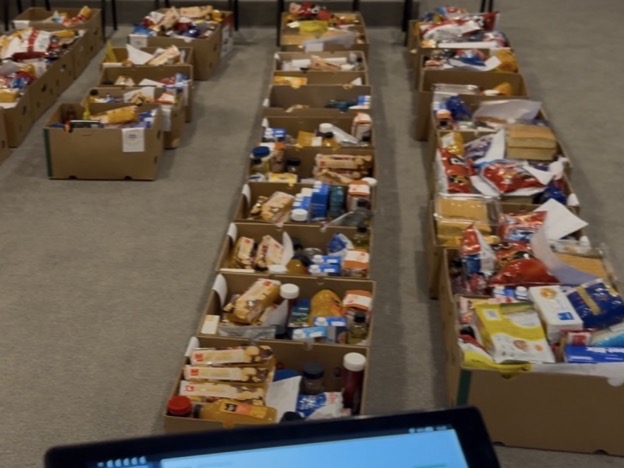
Rows of packed grocery boxes laid out on a hall floor beside a laptop showing the pick list

Let volunteers spend the distribution with people

Most of a distribution goes on checking clipboards instead of talking to anyone. HelpingHand prints the pick list in aisle order, keeps the counts straight, and stops the same order being written down twice.

  • Printed pick lists that volunteers can actually read
  • No double entry between the sign-in sheet and the spreadsheet
  • Pickup windows and delivery routes planned ahead of the day
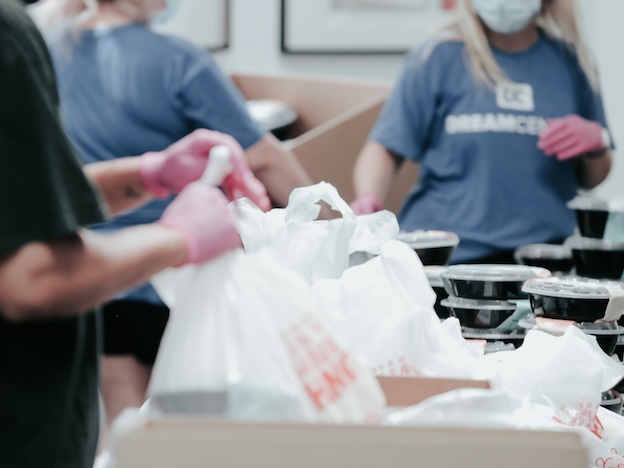
Volunteers in masks and gloves bagging groceries for a distribution

Know what is on the shelf before you offer it

Inventory is counted as it arrives from the food bank, a retail rescue pickup or a food drive, and again as it goes out. What shows online is what is actually in the storeroom, and high-demand items can be capped so the first ten households do not clear them out.

  • Live inventory across your storeroom and mobile pantry sites
  • A photo on every item so nothing gets mistaken
  • Out of stock items drop off the online list automatically
  • Per-household limits on high-demand items
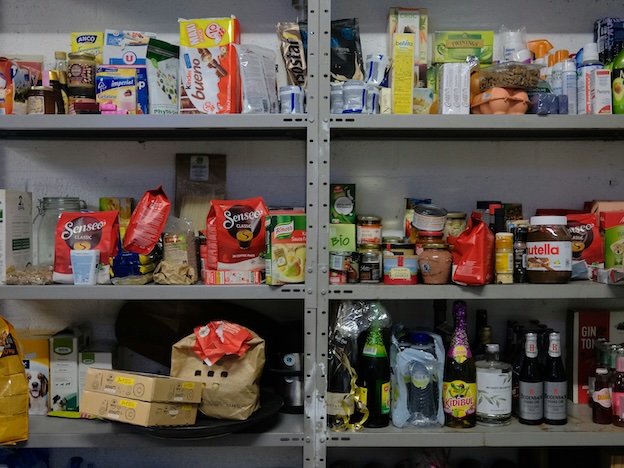
Pantry shelves stocked with canned, packaged and bottled groceries

Let neighbors choose their own groceries

Nobody should have to explain in line that their family cannot eat gluten, or that they have no way to cook a frozen turkey. Preferences are recorded once and honored every time, and the choosing happens in private on a phone.

  • Neighbors choose their own items within their allotment
  • Dietary needs and household size recorded once
  • Works on a phone, because that is what people have
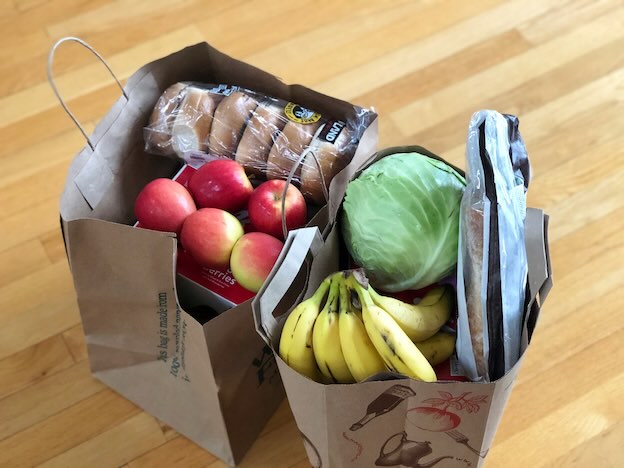
Two paper grocery bags packed with bread, apples, bananas and a cabbage

Get your pantry running in an afternoon

HelpingHand runs the whole pantry in a browser. Neighbors register once and order what they will actually use, volunteers pick from a printed list, and what you ordered from the food bank is counted against what went out the door. Staff, volunteers, partner agencies and neighbors each see only what they need.

  • Online intake and client choice ordering
  • Scheduled distributions, pickup windows and delivery routes
  • Service numbers your board and funders can use
Rows of packed grocery boxes laid out on a hall floor beside a laptop showing the pick list

Let volunteers spend the distribution with people

Most of a distribution goes on checking clipboards instead of talking to anyone. HelpingHand prints the pick list in aisle order, keeps the counts straight, and stops the same order being written down twice.

  • Printed pick lists that volunteers can actually read
  • No double entry between the sign-in sheet and the spreadsheet
  • Pickup windows and delivery routes planned ahead of the day
Volunteers in masks and gloves bagging groceries for a distribution

Know what is on the shelf before you offer it

Inventory is counted as it arrives from the food bank, a retail rescue pickup or a food drive, and again as it goes out. What shows online is what is actually in the storeroom, and high-demand items can be capped so the first ten households do not clear them out.

  • Live inventory across your storeroom and mobile pantry sites
  • A photo on every item so nothing gets mistaken
  • Out of stock items drop off the online list automatically
  • Per-household limits on high-demand items
Pantry shelves stocked with canned, packaged and bottled groceries

Let neighbors choose their own groceries

Nobody should have to explain in line that their family cannot eat gluten, or that they have no way to cook a frozen turkey. Preferences are recorded once and honored every time, and the choosing happens in private on a phone.

  • Neighbors choose their own items within their allotment
  • Dietary needs and household size recorded once
  • Works on a phone, because that is what people have
Two paper grocery bags packed with bread, apples, bananas and a cabbage

Why It Matters

Less waste, calmer distributions, and numbers your funders accept

Give volunteers their distribution back

Pick lists come off the system already sorted, so a shift is spent with neighbors rather than on paperwork.

Stop food expiring on the shelf

Counted inventory and dated lots mean cans get used in the right order instead of being found expired at the back.

Make high-demand items go further

Diapers, formula and personal care stretch further when the system applies the limit instead of a volunteer having to say no.

Report outcomes without rebuilding the year

Households served, pounds distributed, referral sources and repeat visits, exportable for a grant report or a board packet.

Start a 30-day trial

Long enough to learn it, and to become hard to give back. No IT staff required

Pricing

Start with a free 30-day trial. Cancel any time. Call us if you have any questions or would like a quote.

Walk-ins

USD $12 / mo / 100

+ GST

  • Register walk-ins
  • Reports to donors
  • Pickup locations
  • Item selection
  • Point-based ordering
  • Referral codes
  • Referrer sign-ins
  • Category limits
  • No stock control

Kiosk

USD $12 / mo / 100

+ GST

  • Register walk-ins
  • Reports to donors
  • Pickup locations
  • Item selection
  • Point-based ordering
  • Referral codes
  • Referrer sign-ins
  • Category limits
  • Basic stock control

Orders

USD $35 / mo / 100

+ GST

  • Register walk-ins
  • Reports to donors
  • Pickup locations
  • Item selection
  • Point-based ordering
  • Referral codes
  • Referrer sign-ins
  • Category limits
  • Basic stock control

Smart Orders

USD $47 / mo / 100

+ GST

  • Register walk-ins
  • Reports to donors
  • Pickup locations
  • Item selection
  • Point-based ordering
  • Referral codes
  • Referrer sign-ins
  • Category limits
  • Full stock control

Frequently Asked Questions

Questions we hear most often from US food pantries

What does moving to client choice actually change?

Neighbors take only what their household will use, so less food comes back or goes in the trash. Volunteers pack to an order instead of guessing, which makes a distribution faster and quieter. And because every choice is recorded, you finally know what your community actually wants on the shelf.

We order from a regional food bank. Does that fit?

Yes. Inventory is counted as it arrives, whether that is a food bank order, a retail rescue pickup or a food drive, and counted again as it goes out. That gives you the difference between what you brought in and what you distributed, which is the number most reports start from.

What can we give our funders and board?

Households served, individuals reached, pounds distributed, referral sources and repeat visits, all exportable. It comes from the same records your distribution runs on, so a grant report does not mean reconstructing the year from sign-in sheets.

How do you stop duplicate registrations?

Each household registers once and is verified by a partner agency or by your own intake. The system recognizes an attempt to register again under a new name or address, tracks how much a household has taken against its allotment, and flags patterns worth a second look.

Our volunteers are not especially comfortable with computers.

Most of what a volunteer touches is a printed pick list. Everything else is a photo and a checkbox. Inventory photos can be taken on a phone, out of stock items disappear on their own, and nobody has to learn a spreadsheet.

Contact

We are a New Zealand company working with food pantries across the US. Email is the fastest way to reach us and we answer within one business day.

Address

Milford,

Auckland 0620,

New Zealand

Call Us

Email Us

Office Hours

Monday - Friday

9:00am - 5:00pm New Zealand time

Are you human? Please confirm below before sending.

Loading
Your message has been sent. Thank you!